
This guide is written for product brands, e-commerce sellers, and startups launching new products in the US market. Getting this process right affects three things directly: whether your product survives shipping, how customers perceive your brand on first contact, and whether it actually converts on a shelf or in a cart.
Too often, packaging design gets reduced to "make it look nice." In reality, it involves structural engineering, material science, regulatory compliance, and production coordination long before anyone picks a color palette.
Below, we break down what packaging design actually is, why the process matters, how it works step-by-step, and when it makes sense to bring in a packaging partner.
TL;DR
- Structural engineering, materials, and graphics have to work as one system—or the pack fails in transit or on shelf
- Strong programs run research → concepts → prototypes → testing → production-ready files without skipping steps
- Sustainability, cost, and compliance decide which concepts can actually ship at scale
- Skip prototyping or ignore shipping conditions and you pay for reprints and damaged goods
- Partners like GIVR Packaging pair structural design with sustainable materials so growing brands cut handoffs and failed runs
What Is Product Packaging Design?
Product packaging design is the process of developing the structure, materials, and visual identity of a package that protects and presents a product. The goal is one package that achieves three things at once: safe transit, shelf appeal, and brand recognition.
The AIGA distinguishes packaging design from image-only work: it involves both the structural aspects of packaging and the image and text that explain the product and its use. Two practical distinctions follow from that definition:
- Not just graphic design: packaging design includes structural and dieline work, not only labels or artwork
- Not the same as branding: branding creates the identity; packaging design applies that identity to a physical, functional object
A folding carton, for example, isn't just printed paperboard. Pro Carton's carton design standard defines it as a specification covering appearance (size, shape, printing) and function, including protection and manufacturing performance.
Why the Packaging Design Process Matters for Brands
Packaging is often a customer's first physical interaction with your brand, and the data backs that up.
Consumers notice packaging, and they act on it:
- 72% of Americans say packaging design often influences their purchase decisions, according to Ipsos
- 67% say the materials themselves influence what they buy
- Premium unboxing experiences increase repeat-purchase likelihood and retailer loyalty, per Retail Dive and Supply Chain Dive reporting
Modern brands have to deliver on three fronts at once: protection in transit, shelf visibility, and sustainability credentials.
What Goes Wrong Without a Structured Process
Skip the process, and problems show up fast:
- Products arrive damaged, driving returns and refunds
- Costly reprints after discovering structural flaws post-production
- Non-compliant labeling that triggers regulatory headaches
- Packaging that doesn't visually match the brand it's supposed to represent
For e-commerce sellers and emerging beverage or CPG brands, weak packaging usually shows up as damage-related returns or soft retail conversion.
A 2024 Harris Poll survey found 60% of Americans received damaged goods when ordering online—shipping durability isn't optional.

How the Product Packaging Design Process Works (Step-by-Step)
The process moves in a predictable arc: understanding the product and audience, developing concepts, prototyping, and finalizing production files.
Inputs that shape the process:
- Product specs (dimensions, weight, fragility)
- Brand assets and visual identity
- Target audience insights
- Budget and timeline
- Sales channel — retail shelf vs. direct shipping
Throughout the core stages, the design gets refined through feedback loops and stakeholder review rather than moving in a straight line. Each round of feedback either validates the direction or sends the team back to adjust materials, structure, or graphics. Those loops run through four core stages.

Step 1: Research and Discovery
Before anyone sketches, teams lock in the facts that drive materials and structure. They typically collect:
- Product specifications — size, fragility, shelf life
- Audience insights — who's buying, where, and why
- Competitor packaging — what's working, where the gaps are
Get this wrong, and material choices and structural requirements slip later.
Step 2: Concept and Structural Development
Here, ideas take physical shape. Designers typically work through:
- Sketches and mood boards for direction
- Dielines that map folds, panels, and cutouts
- Material selection tied to protection and print needs
At GIVR, structural designer Lea Wetzel calls this "arts-and-crafts with math." She uses a Kongsberg cutter to cut rough-draft structures fast, so the team can see what works instead of waiting on theoretical drawings.

Step 3: Prototyping and Testing
Concepts become physical or 3D prototypes at this stage. Teams test for durability, shelf performance, and shipping resilience, then gather feedback before locking anything in.
This is also the stage most commonly rushed — and it's the one that causes the most expensive mistakes when skipped.
Step 4: Final Design and Production Handoff
The last step is preparing everything manufacturers need:
- Print-ready files with correct color codes (CMYK for digital, Pantone-matched for offset)
- Finalized dielines showing folds, bleed lines, and cutouts
- Coordination with manufacturers for production and delivery
GIVR's production handoff calls for vector files (.ai or .eps) with fonts outlined, images embedded at 300 DPI minimum, and at least 1/8-inch bleed. On the final proof, cutlines appear in black, fold lines in red, and perforations in blue.
Where the Packaging Design Process Is Applied
The same packaging design process applies across package types and go-to-market channels:
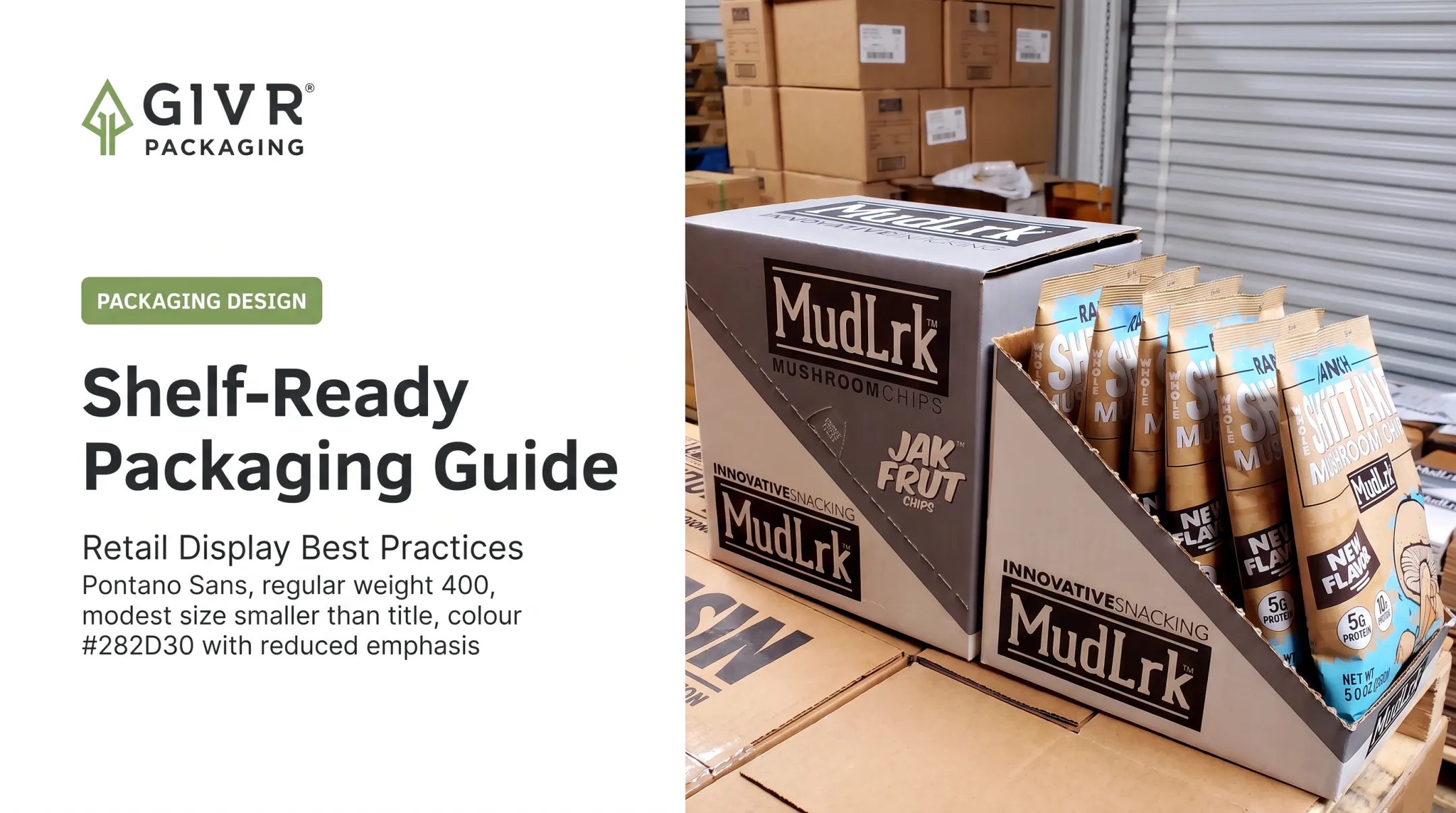
- Retail-ready folding cartons
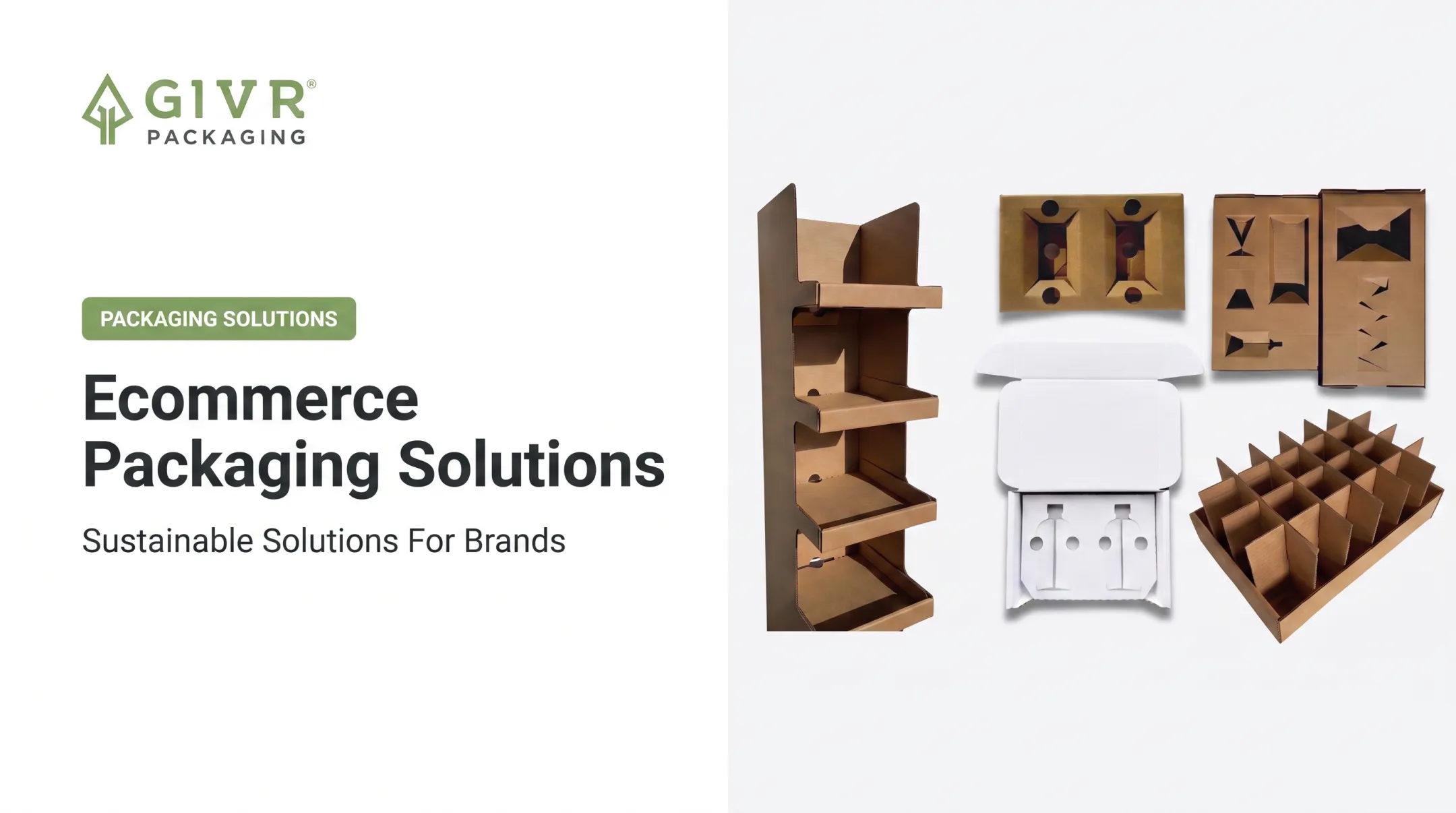
- Shipping mailers and protective inserts
- Beverage packaging and multipacks
- POP (point-of-purchase) displays
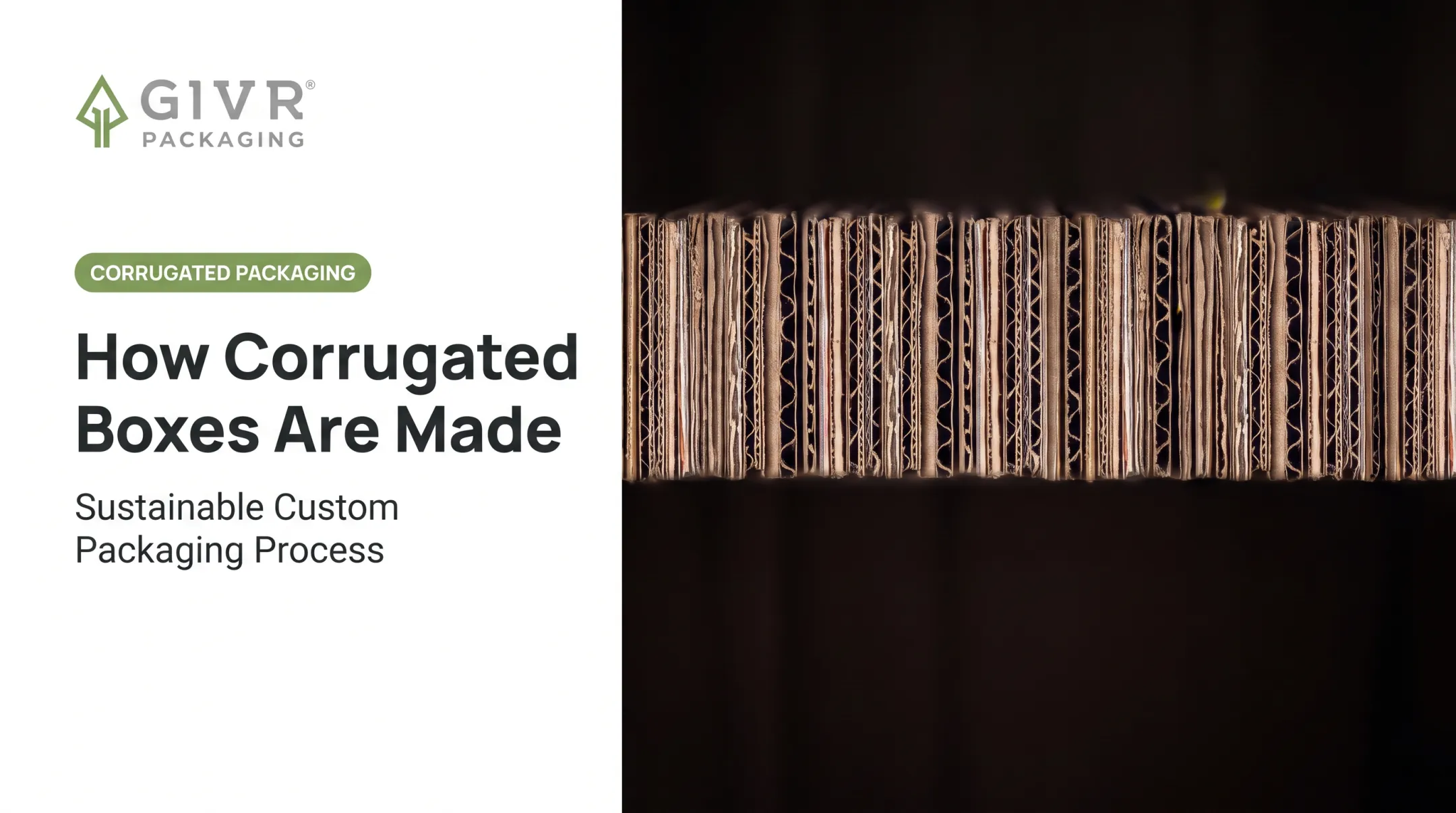
- Custom boxes and master cases
Common triggers for starting or restarting the process
- Launching a new product
- Entering retail for the first time
- Scaling an e-commerce operation
- Redesigning to cut shipping damage
- Committing to sustainability goals
For some brands, this is a one-time launch exercise. For others adding SKUs or refreshing seasonally, it becomes a recurring cycle.
Key Factors That Affect the Packaging Design Process
Several variables shape which packaging decisions are even viable:
- Material choices — recyclable, biodegradable, or standard stocks affect protection, cost, and sustainability. GIVR Packaging, for example, uses SFI- or FSC-certified materials and coated recycled board (CRB), a 100% recycled folding-carton option.
- Product specifications — fragility, weight, and shape dictate structure and whether custom inserts are needed.
- Production method and scale — offset, digital, and flexography fit different volumes. Offset usually needs a 5,000-piece minimum and full Pantone matching; digital handles single-piece orders for prototypes and short runs.
- Sales channel — retail shelf presence and shipping durability pull priorities in different directions.
- Regulatory requirements — labeling, barcodes (GS1 GTINs), and ingredient disclosures vary by category. Food packaging follows FDA labeling guidance; non-food goods fall under the FTC's Fair Packaging and Labeling Act.

Roughly 39% of US consumers say packaging's environmental impact is extremely or very important to their purchase decisions, per McKinsey's 2023 survey. About half are willing to pay a modest premium for sustainable options.
Common Issues and Misconceptions
"Packaging design is just graphic design." Structural engineering and material science determine whether a product survives shipping; graphics are only part of the equation.
"We don't need prototypes, the drawings look fine." Skipping prototyping and testing is one of the fastest ways to end up with costly reprints or in-transit damage after launch.
"Packaging design and packaging are the same thing." The design process is the work that leads to a finished product. The finished box or mailer is the output, not the process itself.
"If I don't personally like it, it needs to change." Teams sometimes override design decisions based on personal taste rather than target-audience data. The result is packaging that fails to convert.
When a Full Custom Design Process May Not Be Necessary
Custom structural design isn't always the right call, especially early on.
- Low-volume or simple products often do fine with stock boxes and standard mailers.
- Tight budgets or short production runs can make custom dielines cost-prohibitive, particularly with offset's 5,000-piece MOQ.
- Semi-custom options (a stock structure with custom print) offer a faster, cheaper middle ground. GIVR's Boutique Beverage Solutions use stock beverage kit designs to save on development time and tooling costs.
- Unvalidated product-market fit is a signal you're over-investing. If you haven't confirmed customers want the product yet, a full custom process is premature.
Conclusion
The packaging design process blends research, structural engineering, prototyping, and production coordination into one system. Understanding how it works helps brands avoid shipping damage, compliance headaches, and wasted spend, while still strengthening how the brand shows up physically.
Partnering with a full-service, sustainable packaging company like GIVR Packaging can simplify the journey from concept through nationwide delivery, particularly for brands that don't have in-house structural design expertise. GIVR's free packaging audit reviews existing packaging for damage risk, fit issues, and waste, then provides prototypes and dielines as part of the process.
What matters most is matching custom design to your brand's actual stage—not over-investing before you've validated the product.
Frequently Asked Questions
What is product packaging design?
Product packaging design is the process of building a package's structure, materials, and visual identity so it protects the product in transit and communicates the brand at the point of purchase.
What does a packaging designer do?
A packaging designer develops both the structural elements (dielines, materials) and the visual elements (graphics, typography) of a package, ensuring it protects the product and supports the brand.
What are the different types of product packaging design?
Common categories include folding cartons, shipping mailers, retail-ready packaging, beverage packaging, and POP displays, each suited to different products and sales channels.
What are the four C's of packaging design?
There's no single universal standard. One common framework uses Consumer, Convenience, Communication, and Cost; another uses Protection, Containment, Communication, and Convenience. Use either as a checklist, not a rigid rule.
How long does the packaging design process typically take?
Timelines vary heavily by complexity. Standard prepress alone typically takes 3-5 business days; full structural design with prototyping takes longer and depends on revision rounds, so get a project-specific estimate from your packaging partner.
How much does custom packaging design cost?
Costs depend on materials, structural complexity, and order volume. Offset printing, for instance, requires a 5,000-piece minimum, while digital allows single-unit orders. Because pricing is project-specific, request a quote from a packaging partner for an accurate number.