
The pain points are familiar to anyone who's managed retail distribution: slow restocking during peak hours, inconsistent branding once products leave the master case, and damaged goods from packaging that wasn't built to double as a display. Traditional shipping cartons weren't designed with the shelf in mind.
This guide covers what shelf-ready packaging (SRP) actually is, why retailers care, the design standards buyers use to evaluate it, common formats, and how to build a sustainable SRP program that holds up in transit and on the shelf.
Key Takeaways
- SRP combines shipping protection with instant retail display, cutting the number of motions needed to stock a shelf.
- Retailers evaluate SRP against the "Five Easies": Identify, Open, Shelf, Shop, and Dispose.
- Effective SRP stays stack-strong in transit and brand-visible on shelf without wasting material.
- GIVR Packaging builds retail-ready, fully circular SRP for beverage, snack, and consumer product brands nationwide.
What Is Shelf-Ready Packaging (SRP)?
Shelf-ready packaging is a secondary or tertiary case, tray, or display unit that travels from the delivery truck to the retail shelf with minimal handling. Store staff don't unbox, repack, or transfer products into a separate display. The shipping container is the display.
Traditional shipping cartons work differently. A standard carton protects products in transit, but stock clerks still have to:
- Open the carton and pull products out one by one
- Arrange items on the shelf or into a separate merchandising unit
- Repeat that process across dozens of cases per shift
SRP collapses those steps into one motion: tear open a perforated panel and slide the display into position.

Why Retailers Are Pushing for SRP
High-volume categories like beverages, snacks, and personal care face the most pressure to meet retailer SRP requirements. These SKUs get restocked constantly, so any friction compounds fast.
Retailers like Kroger publish detailed display guidelines covering pallet sizes, labeling, and barcode placement for exactly this reason. Restocking speed matters when shelves need constant turnover.
SRP vs. Traditional Packaging
Retail buyers judge packaging on protection, stocking speed, shelf presence, and total cost. Here's how the two formats stack up:
| Factor | Traditional Shipping Carton | Shelf-Ready Packaging |
|---|---|---|
| Purpose | Protection only | Protection + display |
| Stocking process | Unpack, discard box, arrange manually | Tear open, place directly on shelf |
| Branding visibility | Hidden once opened | Visible on shelf as merchandising |
| Cost impact | Lower upfront tooling cost | Higher design cost, lower labor over time |
SRP isn't required for every SKU. Choose based on channel and velocity:
- Traditional carton — Low-turnover items or products sold mostly online, where a strong shipper is enough
- Shelf-ready packaging — High-velocity retail SKUs fighting for aisle or endcap space, where fast stocking and on-shelf branding are expected
Why Shelf-Ready Packaging Matters: Key Benefits
The Billboard Effect
An SRP case doesn't disappear into the back room once its shipping job is done. It stays on the shelf as a branded display, functioning like a mini billboard for as long as product remains. Compare that to a plain corrugated box, which gets broken down and tossed the moment it's unpacked — taking any branding opportunity with it.
Protection and efficiency benefits stack up too:
- Combined transport-and-display structural design means fewer components, fewer failure points during transit
- Optimized pallet configurations reduce dimensional weight and warehousing footprint
- Fewer touches during restocking means fewer chances for product damage or shelf gaps

One caution worth flagging: perforations and tear-strips built for easy opening can reduce a corrugated case's compression strength by 5% to 30%, according to Packaging Digest. Test your design under real transport and stacking conditions before you commit to production.
Sustainability as a Design Driver
Single-material construction with minimal adhesive is what environmentally conscious retail buyers and consumers increasingly expect. Fewer materials cut cost, simplify recycling, and leave less waste in the stockroom.
The "Five Easies": Industry Standard for SRP Design
Retail buyers evaluate SRP against five practical criteria, often called the Five Easies. Miss even one, and you risk rejection at the loading dock.
- Easy to Identify: Brand, product, and variant should be visible from multiple angles, ideally four-sided branding so the case reads correctly no matter how it's placed.
- Easy to Open: A worker should be able to open it in one or two steps, without a box cutter. Tear strips and perforated panels are the standard solution.
- Easy to Stock/Shelve: The case should slide, drop, or tear into position with minimal repositioning. Forward-facing product configuration speeds this up.
- Easy to Shop: Once on the shelf, facings need to stay stable and accessible so shoppers can grab a product without knocking over the display.
- Easy to Dispose: Empty material should break down and route into recycling streams without extra sorting steps.

Run compliance testing before launch. A case that passes four criteria but fails "easy to open" without a box cutter can still get bounced back by a buyer's receiving team.
Designing Shelf-Ready Packaging That Performs
Good SRP design starts with a handful of foundational questions: What brand elements absolutely need to be visible? Will the product display in a tray, a box, or a dedicated merchandising unit? Answering these early prevents expensive redesigns later.
Stackability and Structural Choices
Stackable design matters for restocking speed: the fewer times a worker has to climb a ladder or shuffle product, the faster the shelf gets filled. Beyond that:
- Fragile products need cushioning or custom inserts built around the product's actual shape
- Lightweight items often suit pouches or lighter-gauge structures
- Irregular shapes call for custom trays engineered to the product's geometry
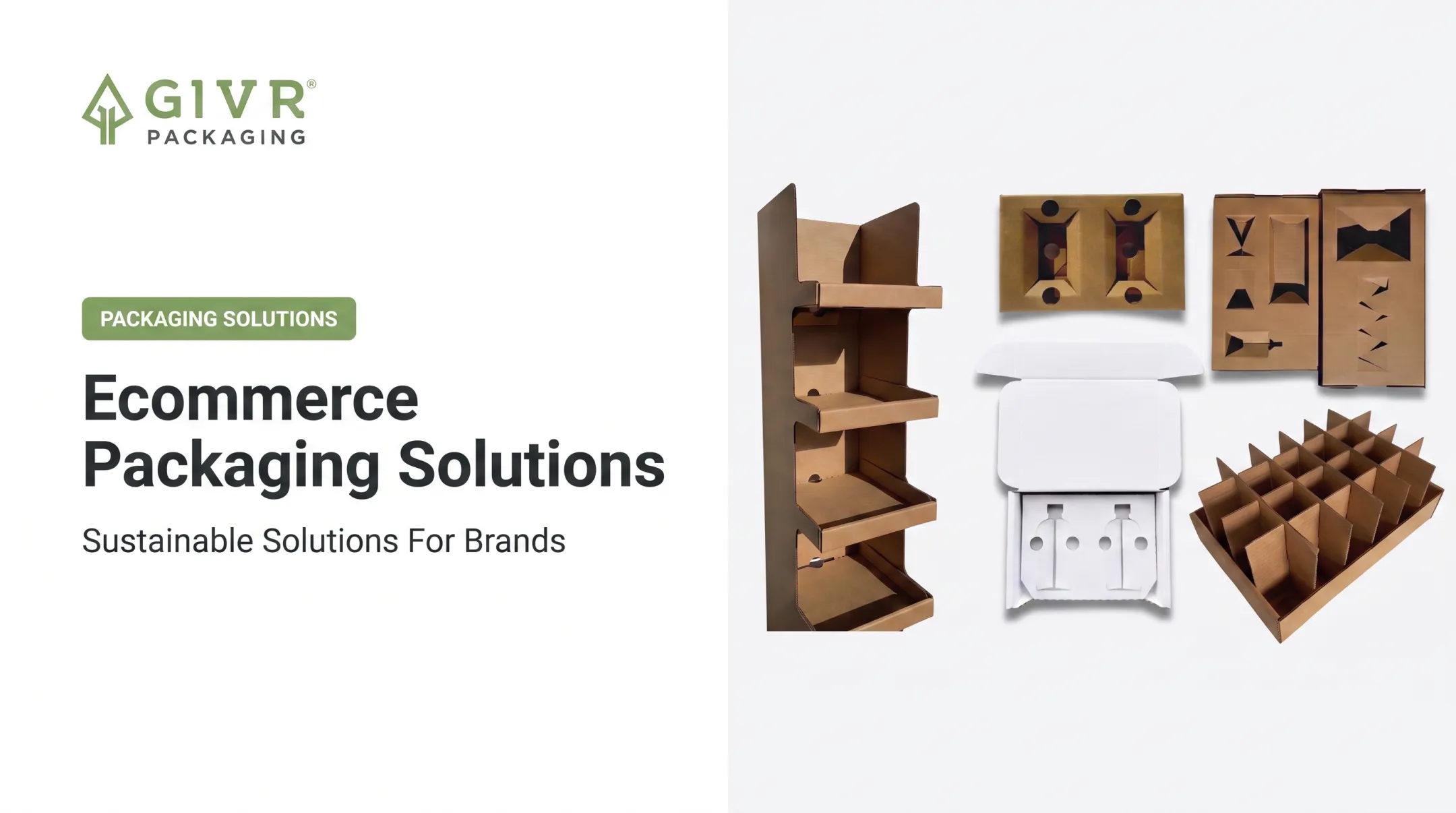
GIVR's structural design team has built custom corrugated inserts for products ranging from snack packets to multi-part equipment kits. Precisely fitted compartments hold irregular configurations securely without relying on foam.
Material Efficiency and Printing Choices
Minimizing materials (no shrink film, minimal tape or staples) lowers production cost and aligns with retailer sustainability requirements.
Printing method affects both budget and volume flexibility:
- Digital printing: no meaningful MOQ, ideal for short runs, prototypes, or highly customized designs
- Offset/litho printing: typically requires a 5,000-piece minimum, but supports finer detail and finishes like foil or embossing
- Flexographic printing: suited to high-volume runs on brown boxes and similar structures

Choosing the right method early avoids paying for embellishments you don't need or getting stuck with a minimum order that doesn't match your launch volume.
Common Types of Shelf-Ready Packaging
Different product categories call for different SRP formats:
- Tray-style packaging — common for snacks and beverages, where cans or bags sit in an open tray for quick shopper access
- Display-ready boxes — frequently used for cosmetics and small goods, often with a tear-away front panel
- Custom folding cartons — built for branded presentation where shelf appeal matters as much as protection
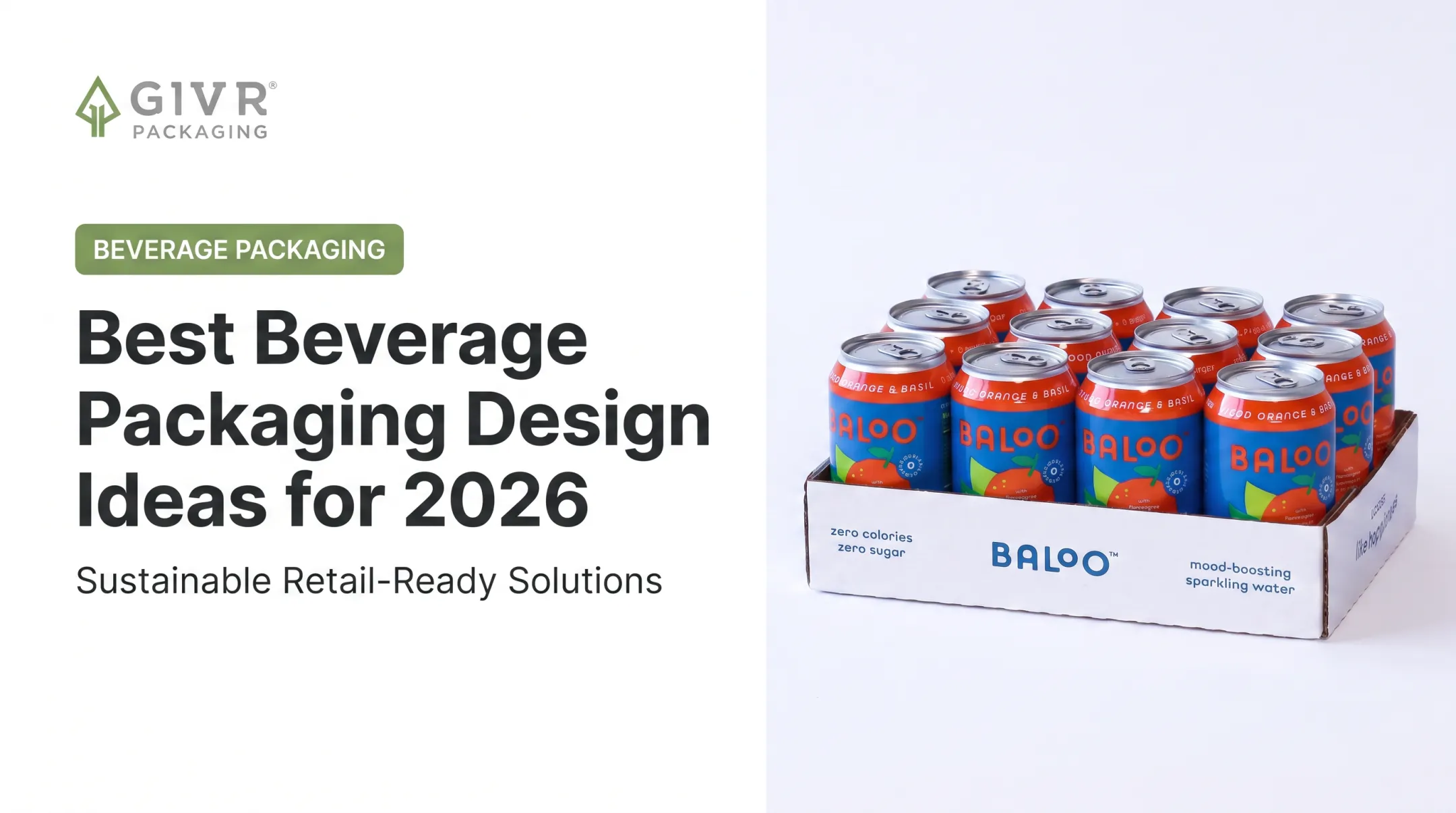
GIVR has built each of these formats for real clients. Its beverage packaging kits accommodate various can sizes and case counts for brands like BALOO, whose sparkling water ships in a tray built for both retail shelving and direct-to-consumer orders.
For snack brands, GIVR designed an open-front, angled countertop display for MudLrk mushroom chips—a case that ships as a master carton and tears away into an immediately deployable shelf display. Candid Noons uses custom folding cartons for its cacao crunch bites, balancing branding with retail presentation.

Choosing a Sustainable SRP Partner
Format choice is only half the decision. Retailers increasingly favor recyclable, minimal-material construction, and shoppers notice packaging waste more than they used to.
GIVR's approach centers on a few concrete commitments:
- All materials are SFI- or FSC-certified
- Products and inks are 100% recyclable
- The company operates plastic-free, with no plastic products of any kind
- Tree-planting partnerships have contributed to 303,832 trees planted, absorbing an estimated 14.5 million pounds of CO₂ annually
Structural engineering expertise paired with a fully circular model is what GIVR brings to brands launching or scaling retail SRP, from beverage startups to established consumer goods companies.
Frequently Asked Questions
What is display-ready packaging?
It's packaging designed to convert directly into a retail display unit after opening, without disassembly or repacking. The shipping case and the shelf display are the same structure.
What are display-ready cases?
These are case packs that open via perforations to reveal an organized, shelf-ready product arrangement. GIVR Packaging builds these as tear-away master cases that convert into open-front displays once the perforated section is removed.
What are the four C's of packaging design?
Containment, Protection, Convenience, and Communication. For SRP specifically, that means holding and protecting products in transit while making them easy to open, stock, and identify on the shelf.
What are the packaging design trends for 2026?
Expect more smart features like QR codes and NFC tags, continued growth in recycled-content materials, and greater use of digital printing for flexible, short-run designs.
What are the 7 basic steps to packaging design?
A typical workflow includes: needs assessment, budget planning, structural and graphic design, printing method selection, prototyping, artwork prep, and production. This isn't a formal industry standard, but it reflects how most packaging projects move from concept to shelf.
What are some clever packaging ideas?
Popular SRP approaches include:
- Built-in handles for easy carrying
- Window cut-outs that show the product without opening the case
- Ship-flat designs that fold out into a full display