
In a 2022 Dotcom Distribution study of 1,150 U.S. online shoppers, 41% said premium packaging made them more excited to open a delivery, and 51% saw the brand as more upscale as a result. That's a real signal about perception and purchase intent, even if it's not a guarantee of sales lift.
Ecommerce brands now juggle three competing goals: protect the product, control shipping costs, and build a brand experience customers want to share. Add rising consumer expectations around sustainability, and packaging decisions get complicated fast.
This guide breaks down packaging types, materials, sustainability practices, and how to pick a partner that can grow with your brand.
Key Takeaways
- Balance protection, brand experience, and sustainability in every packaging choice
- Let product fragility, size, and shipping method drive packaging type selection
- Treat sustainable packaging as a consumer expectation, not an optional upgrade
- Use full-service partners to scale without sacrificing quality or sustainability
What Is Ecommerce Packaging?
Ecommerce packaging is the materials and design used to ship, protect, and present products bought online. It's a different animal from retail shelf packaging, which is built to catch a shopper's eye in a store aisle.
Ecommerce packaging does two jobs at once. Physical protection keeps products intact through conveyor belts, delivery trucks, and porch drop-offs. Brand presentation creates a moment of delight when the customer opens the box at home.
For direct-to-consumer and online-only brands, this box is often the first physical touchpoint a customer has with the brand. There's no storefront, no shelf display, no salesperson. Just a package on a doorstep.
That single fact changes how packaging should be designed. A DTC brand moving into retail later needs to ask whether one structure can handle both jobs, or whether a shipping box and a shelf-ready pack need to be separate.
Types of Ecommerce Packaging Solutions
Not every product needs the same box. Here's how the major formats break down.
Corrugated Shipping Boxes
Corrugated boxes remain the workhorse of ecommerce fulfillment. They're durable, stackable, and versatile enough for standard goods and heavier items alike.
GIVR Packaging offers brown corrugated boxes in stock and custom sizes, from mini to jumbo, across a full range of material and strength grades. Printing options include digital, flexographic, and offset — with offset delivering the sharpest detail for fine text and artwork. Match the grade to the product: over-engineering a light item wastes money; under-engineering invites damage claims.

Mailer Boxes and Folding Cartons
Mailer boxes and folding cartons suit subscription boxes, retail-ready presentation, and premium unboxing moments where structure and print quality matter.
GIVR's folding cartons support digital printing (1-piece minimum) and offset printing (5,000-piece minimum). Offset matches 100% of Pantone colors for photorealistic branding; digital matches more than 90% with no plate setup, so smaller runs stay practical.
Poly and Bubble Mailers
Traditional poly and bubble mailers work for soft goods, apparel, and lightweight, non-fragile items. But plastic-based mailers are increasingly out of step with buyer expectations and recycling infrastructure.
GIVR does not produce or sell plastic packaging. In its place, the company offers shippable mailers — custom corrugated mailers built to ship without an outer box. They support digital printing with no minimum order quantity, and same-day quotes cover runs from 1 to 5,000 pieces in E- and B-flute construction.
Why brands switch:
- Drop plastic mailers that buyers and recyclers reject
- Ship soft goods in a printable corrugated format
- Order small digital runs without an MOQ barrier
Protective Inserts and Void Fill
Custom inserts and dunnage cushion fragile items and cut down on damage-related returns. Generic packing material only fills space; a fitted insert locks the product in place.
GIVR produces custom corrugated and folding-carton inserts with dedicated compartments — useful for multi-part kits (device, charger, accessories) and other fragile goods. The same insert adds printable surface area, so protection doubles as a branding moment.
Point-of-Purchase (POP) Displays
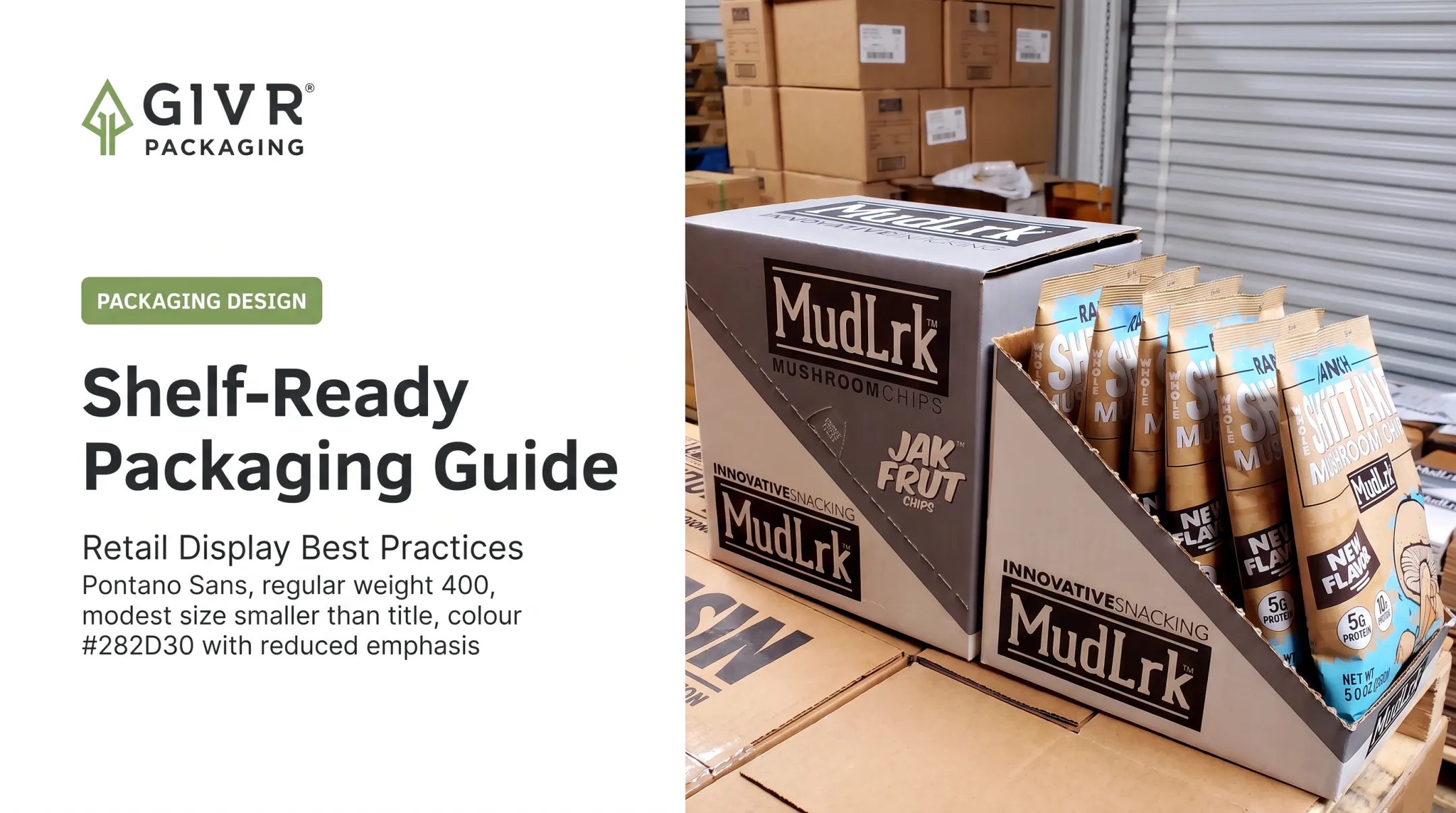
For brands transitioning from ecommerce-only to retail shelves, POP displays drive in-store visibility and conversion.
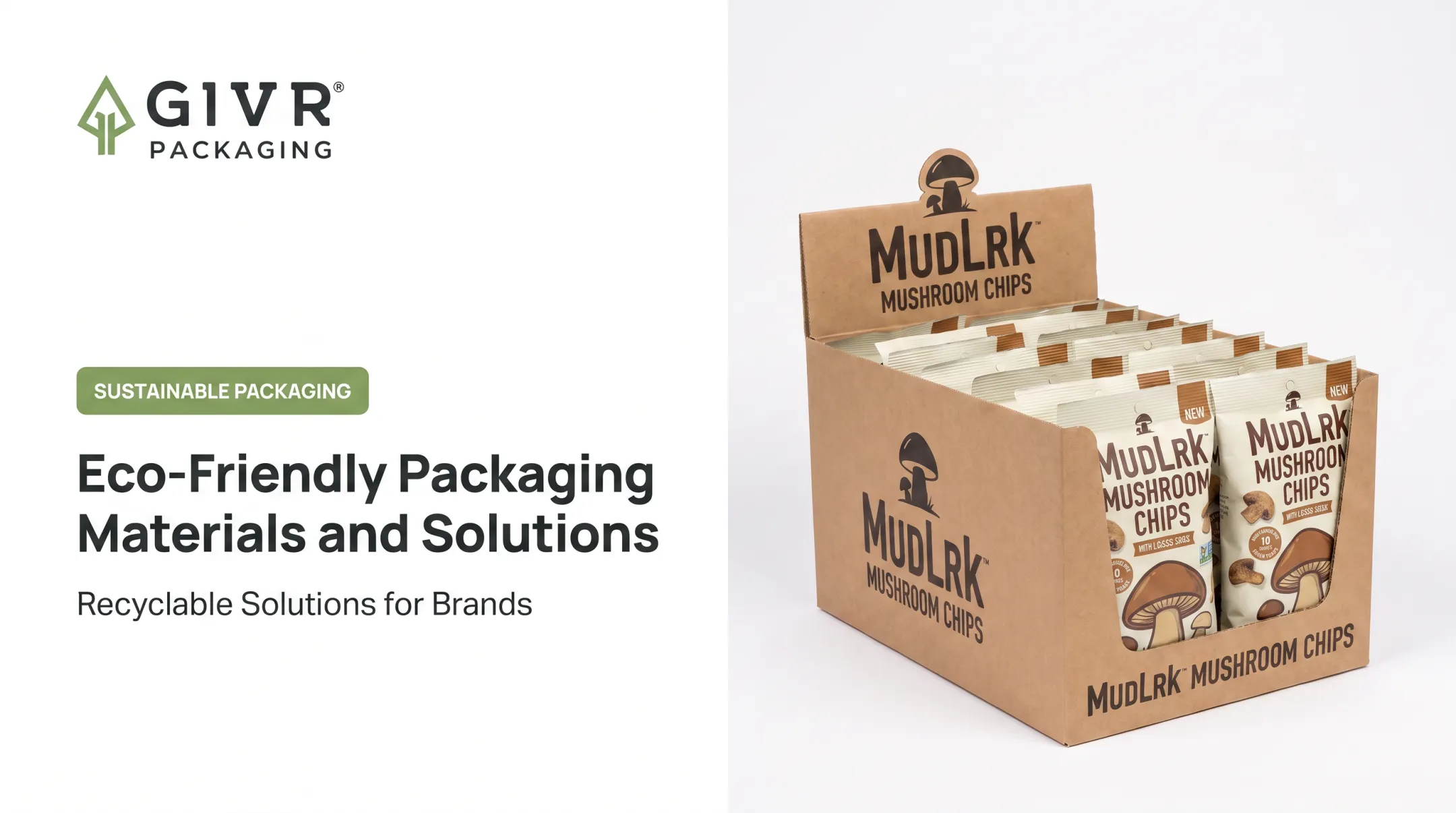
GIVR builds custom and stock-sized POP displays, including beverage case stackers where the shipping case doubles as on-shelf branding. Beverage brands use this approach to lower cost of goods sold while turning one structure into both transit packaging and retail display.

What Types of Packaging Materials Should You Choose?
Material choice comes down to three questions: How fragile is the product? How much does it weigh? How far is it traveling? Common material options include:
- Corrugated cardboard — durable, recyclable, works for most standard shipments
- Kraft paper — lightweight, good for mailers and inserts
- Coated Recycled Board (CRB) — 100% recycled board suited to folding cartons and retail packaging
- Paper-based cushioning — molded pulp, honeycomb, or kraft void fill that protects without plastic Different product categories demand different considerations:
- Electronics need rigid inserts and static protection
- Cosmetics often require moisture resistance and tamper-evident features
- Beverages need compression strength and leak protection Match the material to the risk: rigid fiber inserts for fragile goods, moisture-aware carton structures for cosmetics, and high-compression corrugated for beverages. GIVR Packaging specifies SFI- and FSC-certified materials with recycled content wherever possible. Structures are designed to stay 100% recyclable and plastic-free from concept through delivery.

Sustainable Ecommerce Packaging: What It Looks Like in Practice
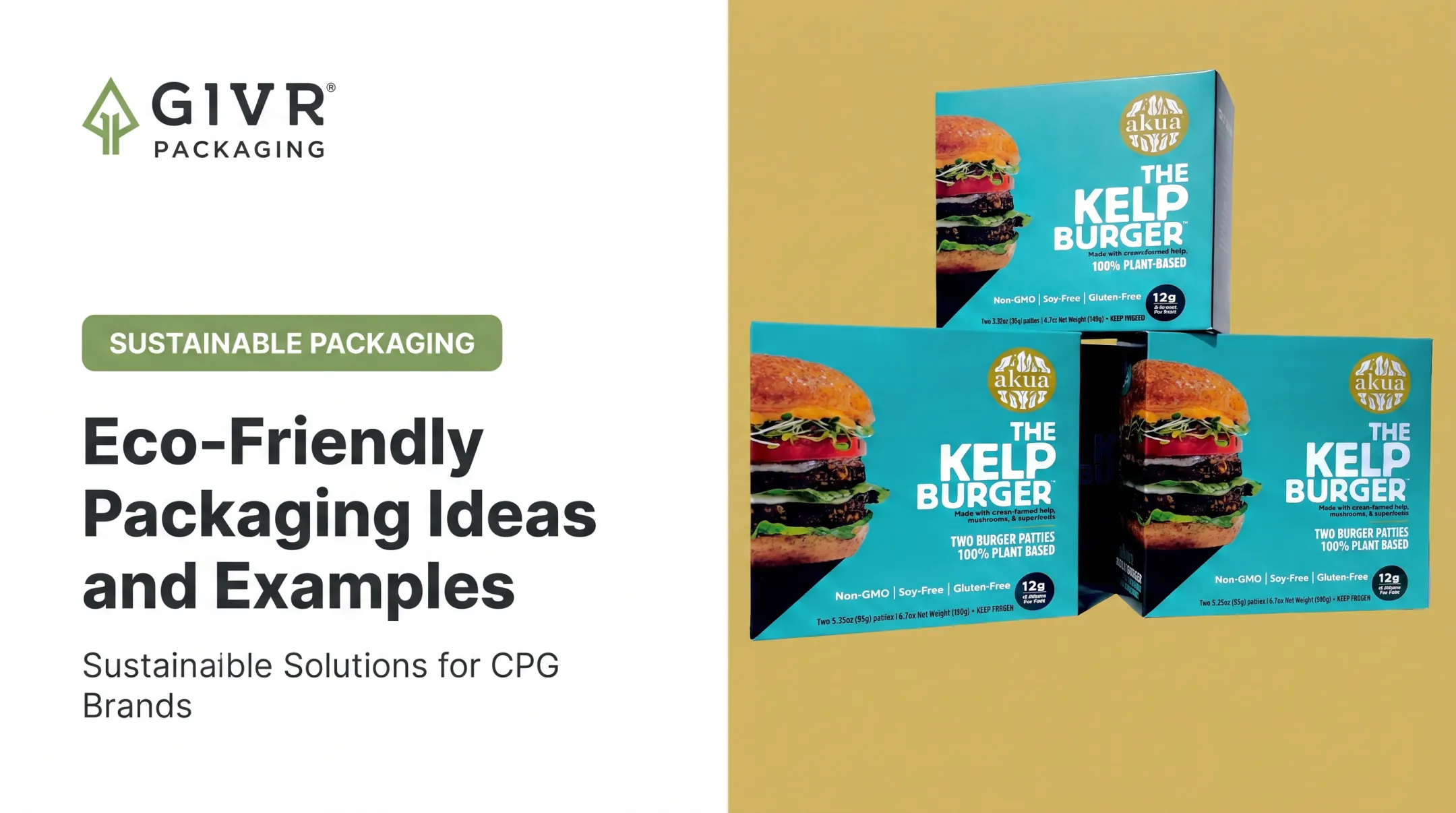
Sustainability in packaging isn't a vague feel-good label. It means specific things: recycled materials, minimal waste, genuine recyclability, and measurable carbon offset work. The demand is real, but so is the confusion. McKinsey's Q1 2023 U.S. survey found that 39% of consumers considered packaging's environmental impact extremely or very important to their purchasing decisions, yet roughly two-thirds had little to no confidence they knew which packaging was actually recyclable. That gap between intent and understanding puts pressure on brands to make disposal instructions clear, not just slap "eco-friendly" on a box. Practical sustainable packaging includes:
- Recyclable shippable mailers instead of poly bags
- Kraft-based cartons instead of laminated stock
- Biodegradable foam instead of petroleum foam
- Clear on-pack recycling instructions (following How2Recycle-type standards) GIVR's approach reflects this philosophy directly. The company produces and sells no plastic products, uses SFI- or FSC-certified materials throughout, and makes everything it produces, along with its ink options, 100% recyclable. Beyond materials, GIVR partners with global tree-planting organizations outside the paper industry to plant more trees than it uses. It reports 303,832 trees planted and roughly 14.5 million pounds of CO2 absorbed annually. The goal is fully circular packaging, not just carbon-neutral.

How to Choose the Right Packaging Partner
Piecing together packaging from multiple suppliers creates friction: mismatched lead times, inconsistent quality, and nobody accountable for the whole picture. A single full-service partner solves that.
Look for these capabilities:
- Full-service scope — design, structural engineering, prototyping, and delivery under one roof
- Structural engineering expertise — not just printing, but real box science
- Sustainability credentials — certified materials and verifiable claims, not vague marketing language
- Nationwide distribution — consistent supply as you grow into new markets
GIVR Packaging's structural design team runs a free, no-obligation packaging audit that covers:
- Design consultation and review of existing packaging
- Structural redesign assessment and die-line review
- A prototype kit with up to one iteration
For beverage brands, that might mean ready-made kits in multiple can sizes. DTC brands often need protective inserts and shippable mailers. Retail brands typically need master cases and shelf displays.
That end-to-end support matters most when you're launching a new product line, scaling past your current supplier's capacity, or restructuring your supply chain after outgrowing a patchwork of vendors.
Frequently Asked Questions
What is the best packaging for ecommerce?
There's no single best option. It depends on product fragility, weight, and shipping distance. Corrugated boxes and shippable mailers are the most common starting points for most ecommerce brands.
What are some examples of sustainable packaging for ecommerce?
Recycled corrugated boxes, biodegradable foam alternatives, kraft-based mailers, and coated recycled board cartons are all common sustainable options. Look for SFI or FSC certification on materials.
What is ecommerce packaging?
Ecommerce packaging is packaging specifically designed to ship products directly from a brand to an online customer's home, rather than to a retail shelf. It must protect the product and often serves as the brand's first physical touchpoint.
What are the seven types of packaging?
There's no single universal industry standard defining exactly seven types. Common categories referenced in ecommerce include corrugated boxes, mailers, folding cartons, rigid boxes, protective inserts, retail displays, and master cases.
Where can I find custom ecommerce boxes?
GIVR Packaging provides custom design, structural engineering, and nationwide U.S. distribution for ecommerce brands. Digital shippable-mailer quotes start at one unit with no minimum order quantity.
What are the five Ps of packaging?
An informal mnemonic sometimes used is Promote, Position, Present, Provide, and Protect. It's a useful planning framework, though it isn't a formally recognized industry standard.